
Did you know that more than 60% of celebrity memoirs and bestselling nonfiction books were actually written by ghostwriters?
Yes, the author whose name is on the cover may not be the person who wrote a single word of it.
That’s the power—and mystery—of ghostwriting. And if you’ve ever wondered how to become a ghostwriter yourself, this guide will walk you through every step. From understanding what a ghostwriter really does to landing your first client, you’ll learn everything you need to know to build a rewarding and profitable writing career.
What Is a Ghostwriter?
You must be thinking, “What is a ghostwriter?” Let me answer it!
A ghostwriter is a professional writer hired to create books, blogs, or other written content for someone else, who then publishes it under their own name.
In simple terms: you write the story; someone else gets the credit (and pays you well for it).
Ghostwriting has become a cornerstone of the publishing world. According to Publishers Weekly, nearly 50% of nonfiction bestsellers are ghostwritten. With the rise of self-publishing and personal branding, that number is growing every year.
Ghostwriters work across industries—helping entrepreneurs write business books, crafting memoirs for public figures, or producing thought leadership content for professionals who simply don’t have the time to write.
How to Become a Ghostwriter
If you’re serious about turning your writing skills into a career, here’s a step-by-step roadmap to follow:
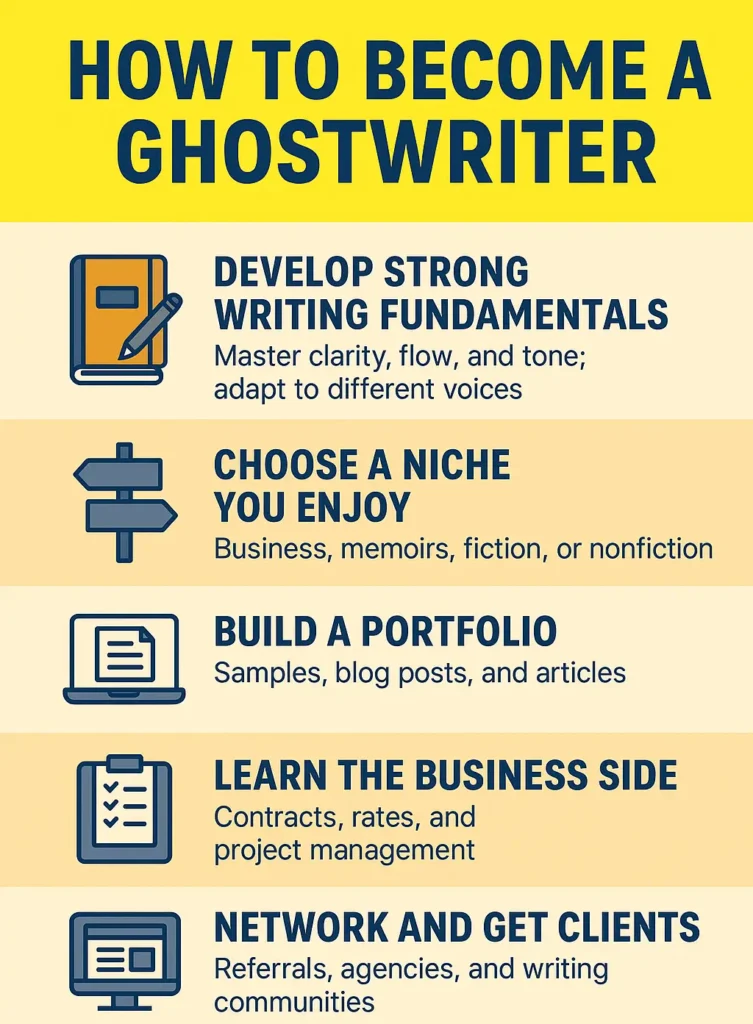
Develop Strong Writing Fundamentals
You don’t need to be a literary genius, but you do need to master clarity, flow, and tone. A ghostwriter must adapt their style to reflect the client’s unique voice.
Start by writing consistently—blogs, essays, short stories—anything that helps you refine your craft. Take writing courses or workshops to improve structure and storytelling.
Choose a Niche You Enjoy
The ghostwriting world is vast. Some writers focus on fiction, others on nonfiction. Choosing your niche early helps you target clients and build expertise faster.
Niche Type | Ideal For | Skill Focus |
Business & Self-Help | Entrepreneurs, Coaches | Research, structure, authority |
Memoirs | Public figures, professionals | Storytelling, empathy |
Fiction | Authors & publishers | Creativity, character development |
Health & Wellness | Experts, therapists | Clarity, trust, readability |
Start where your interests and knowledge overlap—that’s where your best writing will come from.
Build a Portfolio
Clients need proof of your skill. If you’re new, create writing samples that showcase your versatility. You can even ghostwrite sample chapters for imaginary clients to demonstrate your voice adaptability.
Publish blog posts or articles under your own name to show credibility and SEO understanding—two things that matter to serious clients.
Learn the Business Side
Ghostwriting is part art, part business. You’ll need contracts, NDAs, and clear payment terms. Always outline timelines, deliverables, and revisions before starting a project.
Experienced ghostwriters charge anywhere from $15,000 to $100,000+ per book, depending on the project’s complexity and their experience. At The Nonfiction Writers, we proudly showcase our most competitive prices, which you can see on the internet.
Experience Level | Average Rate per Word | Average Book Fee |
Beginner | $0.25–$0.50 | $5,000–$15,000 |
Intermediate | $0.50–$1.00 | $15,000–$35,000 |
Expert | $1.00–$3.00+ | $40,000–$100,000+ |
Build Your Online Presence
If people can’t find you, they can’t hire you.
Create a professional website showcasing your writing services. You will need strong website copywriting skills. Optimize it for keywords like “book ghostwriting,” “hire a ghostwriter,” and “fiction vs nonfiction ghostwriting.”
A few essentials for your website:
- A short, compelling bio that highlights your experience
- Writing samples and testimonials (if available)
- A clear contact form
- SEO-optimized blog posts that show your authority
Network and Get Clients
Many ghostwriters land projects through referrals, LinkedIn, or agencies.
Engage in writing communities, attend publishing webinars, and connect with editors or book coaches.
At The Nonfiction Writers, we work with authors who need professional help—making it easier to find work and grow your credibility.
Book Ghostwriting: The Lucrative Side of the Industry
Book ghostwriting is where the big opportunities lie. A single project can earn you more than a year of freelance blogging.
As a book ghostwriter, you’re not just writing—you’re co-creating a legacy. You’ll learn about your client’s background, structure their thoughts, and write a manuscript that captures their story authentically.
The most successful ghostwriters:
- Understand the publishing process
- Use collaborative tools for drafts and feedback
- Respect the client’s privacy and ownership rights
If you can deliver quality and confidentiality, you’ll never be short on clients.
Fiction vs Nonfiction Ghostwriting
One of the first decisions you’ll make is whether to focus on fiction or nonfiction ghostwriting. Each requires a unique set of skills and approaches.
Aspect | Fiction Ghostwriting | Nonfiction Ghostwriting |
Focus | Storytelling, imagination | Research, structure, real-life narrative |
Client Type | Authors, publishers | Entrepreneurs, speakers, coaches |
Tone | Creative and emotional | Informative and authoritative |
Payout Range | $10,000–$50,000 | $20,000–$100,000+ |
Nonfiction ghostwriting tends to pay more because it demands precision, credibility, and in-depth research. But fiction ghostwriting is ideal for creative writers who love storytelling freedom.
Hire a Ghostwriter: What Clients Should Know
For clients looking to hire a ghostwriter, understanding the process is key. A professional ghostwriter will:
- Schedule a discovery call to understand goals
- Draft an outline or sample section
- Develop chapters with ongoing feedback
- Ensure tone consistency and confidentiality
When clients hire through established agencies or verified freelancers, they’re not just paying for writing—they’re paying for expertise, reliability, and seamless project management.


[…] the human expertise needed to make your book credible, engaging, and impactful. For anyone exploring nonfiction book writing tips, understanding these differences is critical before choosing a writing […]